Google Cloud used Rising Team to strengthen manager effectiveness, build team connection, and support better execution across a large, distributed technical organization.
Book a Demo
Google Cloud Business Platform operates at the kind of scale where
coordination and communication are most of the job. Teams work across
geographies, functions, stakeholder groups, and levels of tenure — all while
navigating constant change.
The organization wanted more than
isolated manager training. It wanted a scalable way to help managers and
teams build trust, connection, and effectiveness as an operating capability.
Rising Team helped Google Cloud move from one-off development moments to an
always-on system embedded into the flow of work.
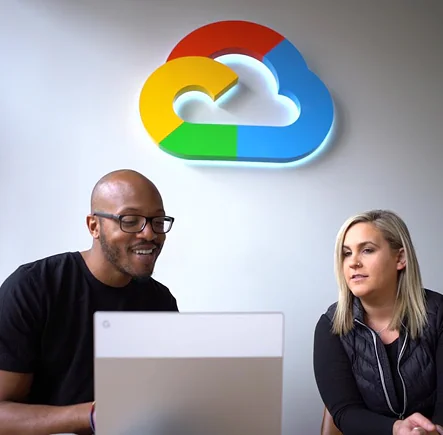

Deployed Rising Team across 1,200 team members in global, distributed, cross-functional teams.

For Google Cloud, the issue was not whether manager development mattered. It
was how to make it work at scale across a highly dynamic technical
organization.
The organization is heavily distributed, with teams across North America, Europe, and India. That created constant coordination overhead across time zones and working styles.
Google already invested in manager development, but Todd made clear that “doing one-off development of managers was necessary, but not sufficient.” The real challenge was improving the team as a whole.
The org supported many different business functions, each with its own stakeholders, leadership chains, and priorities. That made alignment and execution more complex than a single-function engineering org.
New teams, mature teams, new joiners, and different regions all had different needs. A rigid program would not stick across a 1,200-person organization.
Rising Team fit because it matched the realities of a fast-moving
engineering-led organization: high complexity, limited time, and a need for
sustainable adoption.

Rather than adding big new programs, Google Cloud used a lightweight
quarterly cadence. The model landed at one development or connection kit
plus two minis per quarter.

Todd emphasized that the system needed to be “easy to use” and
“self-service.” Managers could run sessions when they made sense for their
teams, which increased adoption across a complex org.

Google rolled out Rising Team the same way it rolls out products: start
with smaller groups, learn fast, then expand. The team adjusted the
cadence, reduced overload, and added flexibility as it learned what
worked.

The organization made recommendations, but managers kept the freedom to
choose what their teams needed most. That balance helped the system stay
relevant across different stages of team formation and maturity.

Google Cloud saw strong adoption signals early, then broader organizational
patterns that reinforced the value of a continuous model.
Todd said the “feel more connected” measure stood out repeatedly across the rollout. That mattered because connection and psychological safety were core to the team problem Google Cloud was trying to solve.
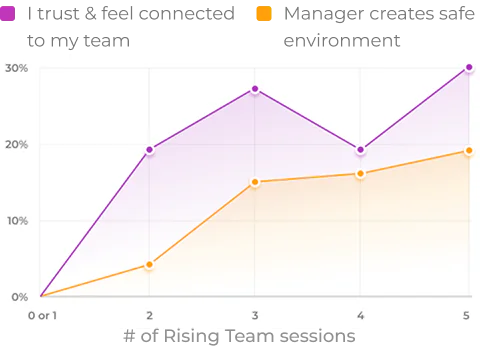
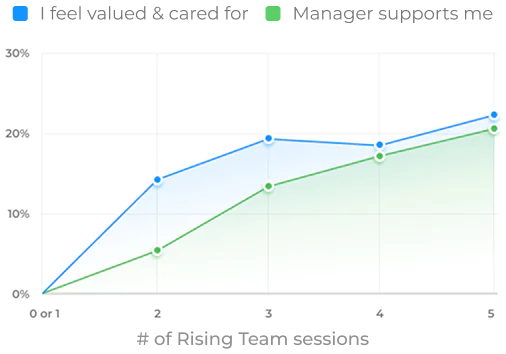
Google Cloud found that more team sessions meant higher engagement. Teams with repeated exposure reported stronger outcomes across support, resilience, inclusion, and manager effectiveness.
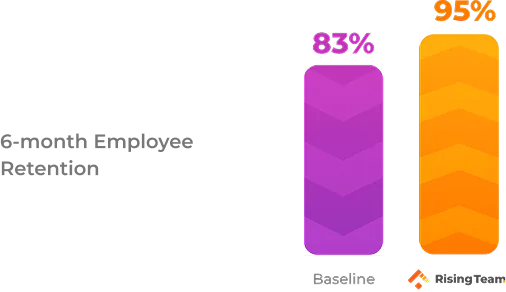
Participation was associated with a greater likelihood of retention, with higher lift among teams that had completed more sessions and more recent sessions.
Rising Team worked because it matched the realities of a large technical
organization. It respected managers’ time, gave teams flexibility, and made
team development part of the way work gets done.

Connection, trust, and safety created a stronger base for the organization. In periods of change, that foundation helped teams adapt faster and work through uncertainty more effectively.
Team effectiveness was treated as an ongoing investment, not a once-a-year event. The value came from consistent repetition, not a single big moment.
As participation grew, teams built a common language and shared reference points across managers and groups. That helped the approach become more self-sustaining over time.
The rollout was refined as the organization learned what worked. Adjustments to cadence, structure, and manager flexibility made the model sustainable enough to scale.
See how Rising Team helps engineering, IT, product, and HR leaders alike make manager development and team effectiveness part of the operating rhythm.