As DXC Technology took on a major back-office transformation, Rising Team helped its IT organization strengthen trust, improve engagement, and support more consistent performance across distributed teams.
Book a Demo
DXC’s IT organization was leading an ambitious back-office transformation
spanning processes, data, and systems. Leadership knew the technical work
would only succeed if teams could collaborate with more trust, adapt through
change, and stay aligned under pressure.
Rising Team gave DXC a
scalable way to strengthen the human side of execution. By embedding
structured team development into the flow of work, the organization improved
connection, reinforced manager effectiveness, and helped teams perform more
consistently through transformation.
The transformation challenge was not only operational. It was deeply
organizational. DXC needed teams that could move through change with more
trust, more resilience, and less friction.
A 2023 survey of IT employees revealed that many people still felt disconnected from one another, even after working together for years — in some cases, decades.
Limited opportunities to build relationships had weakened trust across teams. That made collaboration harder at exactly the moment cross-functional execution mattered most.
DXC IT was integrating systems, data, and processes to support new growth. Leadership understood that resistance to change and uneven adoption could slow momentum and make transformation harder to sustain.
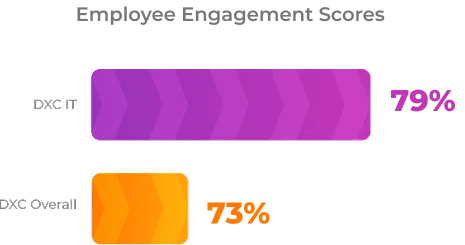
Even as one of the company’s most engaged groups, IT leadership saw room to build deeper connection, stronger alignment, and better team performance.
DXC needed a solution that could reach distributed teams, fit into demanding
schedules, and scale without creating more operational overhead. Rising Team
gave the organization a practical way to strengthen trust and cohesion
across a virtual-first environment.

Every manager was expected to facilitate at least one Rising Team session
per quarter. Sessions were also built into performance goals, reinforcing
that team effectiveness was a leadership priority, not a side
initiative.

DXC partnered with Rising Team to create a customized curriculum shaped by
employee survey insights. Recommended sessions focused on the issues most
relevant to the organization, including trust, collaboration, and team
connection.
The platform’s virtual format made it possible to engage teams across
locations and time zones without relying on offsites or high-lift
coordination.

The introduction of Minis made participation easier for globally
distributed teams. These shorter sessions created a lighter, more
sustainable rhythm and helped team-building become part of day-to-day
work.


DXC saw meaningful improvements not only in how teams felt, but in how they
operated. The results pointed to stronger team health and more durable
execution during change.
One of the clearest signals was a 26% increase on the Pulse survey measure tied to being happy in the current role. That suggests stronger day-to-day team experience, not just short-term session lift.
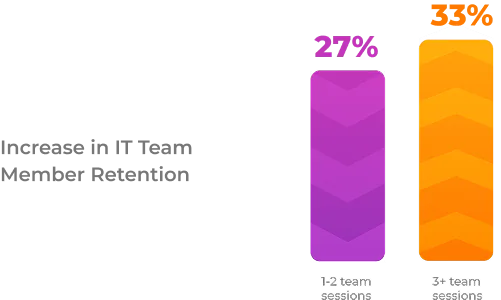
Employees who completed more Rising Team sessions were significantly more likely to stay with DXC. Even during periods of elevated turnover, repeated participation correlated with materially stronger retention.
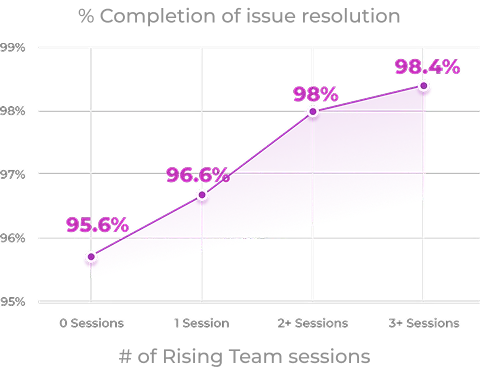
An analysis of more than 21,000 IT tickets found that teams participating regularly in Rising Team resolved nearly 3% more issues — translating to 649 additional tickets closed. Stronger team dynamics drove measurable gains in both productivity and operational performance.
The program worked because it fit the pressures of enterprise technology
leadership. It gave managers a lightweight way to build trust, helped teams
stay connected in a virtual environment, and supported the kind of execution
transformation demands.

With CIO sponsorship and manager accountability built into performance goals, the rollout had clear executive backing and organizational visibility from the start.
This was not positioned as separate from delivery. The work focused on helping teams collaborate better, navigate change more effectively, and reduce friction during a major enterprise initiative.
The format matched how the organization already operated. Teams could participate across geographies without needing major scheduling changes or additional infrastructure.
The combination of quarterly sessions and shorter Minis created a cadence teams could sustain. That consistency made the benefits more repeatable and more likely to hold over time.
See how Rising Team helps CIOs, CTOs, and IT leaders strengthen manager effectiveness, improve team connection, and support better execution across distributed organizations.