The Human Native Leader

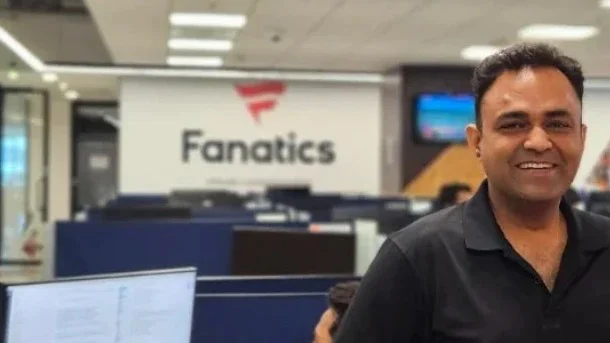
Ryan Starks, VP of Marketing & Growth, Rising Team
Abhishek Dhasmana, VP of Product & GM India, Fanatics
In this Human Native Leader conversation, Fanatics VP of Products and India Tech Center general manager Abhishek Dhasmana joins Rising Team's Ryan Starks for a wide-ranging discussion on how leaders develop managers while AI reshapes how work gets done. Abhishek explains why company values have to be lived rather than memorized, describes the hidden cost of inconsistent manager development on distributed teams, unpacks how Fanatics' BOLD framework makes values real through performance management, and shares early results from rolling out AI-enabled coaching. He closes with his conviction that as organizations flatten and workforce churn accelerates, culture — not execution or strategy — will ultimately separate the companies that last.
Practice is what makes values real
Values posted on a wall or recited once a year rarely change behavior. Growing from 200 to 340 people pulled from many different companies, Abhishek Dhasmana says the real work is turning shared principles into habits everyone applies the same way.
The gap in the middle
Traditional manager development steps in once or twice a year, leaving new managers to seek help on their own the rest of the time. Most never do, especially without a trusted network, and the inconsistency quietly builds until it shows up in engagement surveys.
The high cost of distance
Inconsistency is costliest for remote, cross-cultural teams: for a development center in India reporting to a US headquarters, time-zone friction and cultural differences make a common culture harder to establish, so leaders end up fixing symptoms piecemeal instead of the real problem.
How work gets done counts too
Fanatics' BOLD framework works because it's built into performance management. People are assessed on how they work, not only on results, which forces consistency and gives teams a shared language that extends even to internal work, where colleagues become the “fans” to obsess over.
From trial and error to safe practice
AI-enabled coaching removes friction through kits, manager-controlled timing, and a safe space to practice: “on-rails” kits take the creative burden off managers and reliably get teams to open up, manager-controlled scheduling frees development from the once-a-year training calendar, and a private AI role-play space lets managers and employees rehearse difficult conversations instead of learning by trial and error.
Preserving culture in a flattened org
As orgs flatten and churn accelerates, an AI assistant becomes essential to preserving culture. With flatter structures and faster turnover, a single manager can't hold enough context alone, and there's less time to set culture. Dhasmana's early results (66% manager engagement and 95% return users two months in) point to a tool that helps sustain shared context and trust at scale. His conviction: software is a team sport, and culture will eventually trump execution and strategy.
Building a Common Culture in a High-Growth, Distributed Org
[00:00]Ryan: This is the Human Native Leader, a series of conversations with leaders who are rethinking what it means to lead a team while AI changes how work actually gets done. My guest today is Abhishek Dhasmana, VP of Products at Fanatics. He's in the middle of what a lot of tech leaders are wrestling with right now — figuring out how to move fast on AI without losing what makes his teams good at their jobs. Abhishek, welcome.
Abhishek: Thank you so much. Thank you for having me.
[00:27]Ryan: Maybe you can start by setting the scene. Can you describe your scope at Fanatics and what you've been focused on over the past twelve to eighteen months?
Abhishek: I have a dual role at Fanatics. One, as you mentioned, is VP of Product for our AI platform. The other is general manager of our India Tech Center. I joined about 16 months ago, when we were around 200 people. We're now at about 340. But within that growth, we've hired a lot more leaders to lead teams independently from India.
When we got introduced to Rising Team, one problem I personally wanted to solve was this: we've been getting great talent from different companies, and they all come with their own perspective on what the right thing to do is. So how do you quickly create a common culture — not just something written down that you can memorize and recite as “here are the four values of our company,” but something you actually live, exercise, and practice, so we all have a common way of applying those principles and values?
Traditionally that's been hard. Most of the time it's a one-off. You learn the values as a manager either through an annual performance process or when you're in a situation — and in a situation, you tend to fall back on your past experiences and apply what you've learned before. Nothing wrong with that, but it's inconsistent. Everybody has the right intentions, but there's a difference in how people apply them. I really wanted to bring the team together around a shared set of values applied consistently.
▶ How Do You Build a Consistent, Lived Culture in a Fast-Growing Distributed Team?
Abhishek Dhasmana, VP of Products and GM of the India Tech Center at Fanatics, describes the central challenge of scaling a team from 200 to 340 people in 16 months: turning company values from words on a wall into something employees actually live and apply consistently. Because new hires arrive from different companies, each carrying their own instincts about “the right thing to do,” culture can fragment quickly. Dhasmana argues a common culture can't be memorized in a one-off session — it has to be practiced, and applied the same way across managers, teams, and geographies.
The Hidden Cost of Inconsistent Manager Development
[03:39]Ryan: In such a high-growth environment, you're also hiring managers and team leaders — that's another skill you hire for but also want to develop. What have you seen work in the past?
Abhishek: It's a tough one, especially for first-time managers. They have to make the transition from being a really solid individual contributor to leading — and there's that age-old saying, “what got you here won't get you there.” It's especially hard for first-time managers, and harder still if you're a younger manager coming from a different company and trying to settle in. In the past, we've had very few HR-driven programmatic interventions — maybe once or twice a year. But there's a huge gap in the middle, where it's essentially left to the manager to seek help. The onus is on them. They can talk to peers, HR, or senior leaders — but if you're new, that's especially hard, because you don't have a trusted network yet, and you want to discuss things that aren't easy to raise in a new environment. My experience is that most people just won't reach out. They get by on common sense. And even when they do reach out, the advice gets applied inconsistently. I've never had a good tool that works at scale.
[05:42]Ryan: As the organization's leader, what's the cost to you of that inconsistency?
Abhishek: It eventually shows up in what we'd loosely call culture — and the reflection of that is usually an annual well-being survey. You see the same patterns: inconsistency in pockets. And the problem is more acute when you're a remote development center in a country like India while the mothership is in the US. There are natural friction points — time zones, and cultural differences in how you manage people. Managing people is about understanding their context and culture, so even if the value is the same, how you apply it in a different cultural context is different. It becomes a long process just to figure out what the common culture even is. And an after-effect is that you often don't understand the real problem — you're fixing it piecemeal based on what you hear in a survey.
[07:43]Ryan: So you're looking for a way to accelerate that — especially in this environment, where time is of the essence.
Abhishek: Two hundred percent. Even in the last six months, AI has accelerated the rate at which we produce software and business results — and the expectation of producing it. It's almost impossible to imagine taking years to get consistent application of your leadership principles. That's not going to work.
▶ What Is the Real Cost of Inconsistent Manager Development?
Abhishek Dhasmana, VP of Products and GM of the India Tech Center at Fanatics, argues that traditional manager development leaves a dangerous gap. Formal HR interventions happen once or twice a year; the rest of the time, new managers are left to seek help on their own — and most never do, especially if they're new and lack a trusted network. The cost surfaces later as inconsistency in engagement and well-being surveys, and it's amplified for remote centers separated from headquarters by time zones and cultural context. With AI accelerating the pace of work, Dhasmana contends organizations can no longer afford to let consistent leadership take years to develop.
BOLD: Making Values Real Through Performance Management
[08:24]Ryan: As you've been building the team, infusing the BOLD principles and culture across it was so important. What does that unlock for you?
Abhishek: BOLD is an acronym for our four values: Building championship teams, being Obsessed with fans, demonstrating Limitless entrepreneurship, and being Determined and relentless. At Fanatics, it's not just a value system on a wall — it's part of our performance management. We evaluate people not only on the what — the results they achieved — but also on the how. Those four principles are our rubric for the how.
So the first thing everyone understands is that this isn't to be taken lightly. You're literally evaluated on it — which by definition means it has to be applied consistently. People really need to understand what the principles are and how they'll be evaluated. Take “build championship teams.” What does it mean? A lot of it is situational — how does a manager apply that value to someone straight out of college versus someone who's been here ten years? Consistency is super important; otherwise people rightfully feel it's unfair, and that causes discontentment.
Once you have that shared rubric, it's also easy to see behaviors through those four lenses. If you're coaching someone who reports to you, you can say, “here's what it means to be obsessed with fans.” If you work on a product with external customers, that's easy. But if you're on an internal tool, your stakeholders are internal users — so they're your fans. Having that common language creates consistency in how you apply the same principles across different contexts.
[11:39]Ryan: How does that help with teaming across the broader, global organization?
Abhishek: Working with other teams is just part of the role. Ideally every collaboration is a win-win, but it's human, in certain situations, to think, “let me do more for my team.” That's where we pull it back to “build championship teams” — a short-term optimization where Fanatics loses means nobody wins. You drill that principle down through real examples, because there are real situations where the answer isn't obvious. It's the prisoner's dilemma: if both sides cooperate, the outcome is better, but without built-in trust you're more likely to make a decision that's optimal for you and suboptimal for the larger group. Across teams, cultures, and time zones, it's hard — and since we bring in people from different organizations, they're likely to apply the values differently based on where they came from.
▶ How Do Company Values Become More Than Words on a Wall?
At Fanatics, values are operationalized through the BOLD framework — Building championship teams, being Obsessed with fans, demonstrating Limitless entrepreneurship, and being Determined and relentless. Abhishek Dhasmana, VP of Products and GM of the India Tech Center, explains that BOLD works because it is embedded directly in performance management: people are evaluated not just on what they achieve but on how, using the four values as the rubric. That accountability forces consistency and gives teams a shared language — one that extends even to internal-facing work, where colleagues become the “fans” to obsess over. Without that shared rubric, Dhasmana warns, employees from different backgrounds apply values differently, and perceived unfairness breeds discontent.
What Leaders Should Look For in a Manager Development Tool
[13:52]Ryan: You were exploring the Rising Team solution with your team. Walk me through what you were looking for and evaluating.
Abhishek: A few things. One was a more structured way to help managers and teams understand the principles — but also a space where they can first get to know each other. In the past, how you got assimilated into a team depended largely on whether you were lucky enough to land with a good manager who had figured out the human side and personalized their leadership to different individuals. Rising Team's kits gave us that. When we ran a pilot, it immediately became obvious that this kind of “on-rails” experience removes the friction of creativity from the manager's head — it just gives you a clear way to engage with your team. And sampling it across a lot of seasoned managers, it looked like it incorporated a lot of best practices.
Second, the control was with the manager — they could initiate it when it worked for them. Without a tool like that, you're dependent on whenever HR runs a session, and if you're on leave that week, you lose it.
Third, Rising Team was building an AI bot called Arti that gave managers more avenues to discuss difficult issues. We've all had those experiences — how do you have a difficult conversation? In the past, you either had a natural talent for it or you learned on the job, making mistakes over many years. The promise of using AI for that role-play was very interesting.
[17:06]Ryan: It sounds like the manager gets a playbook to run with their team and a safe space — and as you said earlier, new managers won't necessarily raise their hand. This creates a safe space for them too.
Abhishek: Absolutely. And the pace at which we work at Fanatics is so fast that there's very little time to take a breather. So it's incredibly helpful to have a tool that makes it easy to connect with your team, understand their issues, or just do self-directed learning.
▶ What Should Leaders Look For in an AI-Era Manager Development Tool?
Evaluating Rising Team, Abhishek Dhasmana — VP of Products and GM of the India Tech Center at Fanatics — prioritized three things. First, a structured, “on-rails” experience that removes the creative burden from managers and bakes in best practices, giving teams a reliable way to get to know one another. Second, manager-controlled timing, so development isn't hostage to a once-a-year HR calendar. Third, an AI coaching layer — Rising Team's Arti — that gives managers a private space to practice difficult conversations through role-play, rather than learning by trial and error over years. For a fast-moving organization, Dhasmana notes, low-friction access to team connection and self-development is essential.
Removing Friction: Kits, Timing, and a Safe Space for Hard Conversations
[18:05]Ryan: Your teams work fast; it's hard to carve out time for management and team development. How does this change the game?
Abhishek: There are two or three big game-changers. First, the out-of-the-box kits on different topics that are really easy to get started with — a working-styles kit, or something as informal as “a person who inspired you” or “your most embarrassing moment.” They look simple, sometimes almost irrelevant, but every seasoned manager knows that once people share personal experiences, it creates space for others to open up. The most positive feedback we've heard is, “the first session I did with my team really helped me learn about my team members” — and that's true even for teams that have worked together a long time. Nothing works like two people having shared context.
Second, the control is in your hands for when you run it. This has happened many times: not everyone's available this week? No worries — we'll do it next week. Someone fell sick? We'll do it the week after. You don't miss out, and each team can plan around its own deadlines. Traditionally you run these trainings at the same time for many groups, but each group has different deadlines and business context, so you'd be lucky if half the people showed up — not because they don't want to, but because their context doesn't allow it.
Third, that individual safe space with the AI bot. It's true for both managers and team members. Going into an annual performance review, a manager wants to land the great things and the areas to grow; an employee wants to convey the best things they did — and many people who aren't naturally articulate struggle with that. The role-play is really valuable there.
▶ How Does AI Coaching Remove Friction from Team Development?
Abhishek Dhasmana, VP of Products and GM of the India Tech Center at Fanatics, points to three ways AI-enabled coaching removes friction from manager and team development. Ready-made kits — on topics from working styles to “your most embarrassing moment” — look simple but reliably get teams to open up and build the shared context that makes collaboration work, even among people who've worked together for years. Manager-controlled scheduling means sessions flex around each team's deadlines and absences instead of a rigid company-wide training date. And a private AI role-play space lets both managers and employees rehearse high-stakes conversations like performance reviews — especially valuable for those who don't find it easy to advocate for themselves.
Early Results and Personalization at Scale
[21:34]Ryan: I know you're still early in the journey. What are you seeing from managers and team members so far?
Abhishek: Engagement with managers has been really good. Two months in, about 66% of our managers aren't just engaged — they've had more than five exchanges with the AI trainer. And about 95% are return users, which means it's not a one-off; they keep coming back. As with many things AI, it'll take a bit for it to become default muscle memory — “I have a problem, let me just discuss it with my personal AI trainer” — but we'll see how that unfolds.
[22:33]Ryan: You're in growth and build mode for the India Tech Center. How does the tool fit as you grow?
Abhishek: Two parts. One, as we keep growing, onboarding new people isn't a one-time process — more people keep coming in, and this becomes a standard way to not only onboard to Fanatics but quickly learn the culture and how to apply it. Two, as the AI learns individual preferences and context, I'm hoping it becomes more effective at giving not just general solutions but genuinely personalized ones — because it knows what a person is good at and what they're still working on. Those two things would really help build a strong remote development center like ours.
[24:12]Ryan: The personalization aspect — advice that's specific to the person and their context — is really what makes things land.
Abhishek: Exactly.
▶ What Early Results Does AI-Enabled Manager Coaching Deliver?
Two months into its Rising Team rollout, Fanatics is seeing strong early adoption, according to Abhishek Dhasmana, VP of Products and GM of its India Tech Center: roughly 66% of managers have had more than five exchanges with the AI trainer, and about 95% are return users — a sign the tool is becoming a habit rather than a one-off. Dhasmana sees two compounding benefits as the center scales: a standardized way to onboard new hires into the culture, and increasingly personalized coaching as the AI learns each individual's strengths and development areas. Personalization, he argues, is what makes guidance actually land.
Flatter Orgs, Faster Churn, and Why Culture Still Wins
[24:24]Ryan: For other product leaders and tech-center VPs who are all-in on AI tooling for development, but haven't yet touched how managers lead — what would you tell them?
Abhishek: We're still early in figuring out how we work with AI, but a few things are already evident. The pace at which we all work is elevated. What we expect from one engineer or one product manager is elevated. There's a view that we'll have flatter organizations, where a manager has a lot more people to manage. And because the pace is so high and the context of the people you manage changes so fast, as a manager you need a “context of multiple contexts” — the more people you have, the more you need to know each of their situations. A tool where AI assists both team members and managers helps fill that gap, because there's a limit to how far a single manager can scale. Both sides need an assistant that helps them share context and build trust — especially if the number of direct engagements gets smaller.
And if we have a higher rate of churn in the workforce, it becomes even more important. If your workforce churns faster, the thread of culture gets weaker, because there's no time to set it. I personally believe culture will eventually trump execution and strategy. If you want to build a long-term organization, a tool like this really helps.
[27:13]Ryan: I'm curious about the churn piece — employee turnover and retention. How do you think about that today?
Abhishek: Churn isn't new — it's always happened. It's the rate that's probably changing. Companies have always reduced and expanded their workforce with the business cycle. Looking ahead, I don't know exactly how it'll play out, but we'll probably see shorter cycles of people coming in and going. So my advice is to make sure your culture and your people's strengths can still contribute to the success of the company even through that.
[28:36]Ryan: One last question. Looking two or three years out — some orgs prioritize manager and team development, others don't. What does that gap look like?
Abhishek: The most obvious thing is hard skills — companies need to keep investing in the core skills people need to succeed, whether that favors people who go really deep or people who can wear multiple hats. That'll be a differentiator. But on the people side, I firmly believe companies with a lasting, consistent ethos and value system — companies that can actually bind their people together — will more often than not come out ahead. Ultimately, you need your people to make it work.
Ryan: At the end of the day, it does all come down to people.
Abhishek: We've always said software is a team sport. As long as it stays a team sport, the principle holds: you need a great team. The team can be smaller, but it's still a group of humans working together to produce an outcome much larger than the sum of its parts.
[30:56]Ryan: That resonates. Abhishek, thank you so much for joining us. We're really proud to work with you, and it's exciting to see how far your teams are coming.
Abhishek: Thank you, Ryan. Thank you for having me.
▶ Why Will Culture and People Development Separate the Winners Over the Next Three Years?
Looking two to three years out, Abhishek Dhasmana — VP of Products and GM of the India Tech Center at Fanatics — predicts that AI will push organizations toward flatter structures, higher expectations per person, and faster workforce churn. In that environment, a manager must hold a “context of multiple contexts,” and AI assistants for both managers and team members become essential to sustaining shared context and trust at scale. Faster churn, he warns, weakens the thread of culture — which is why he believes companies with a consistent, lasting ethos will pull ahead. His conviction: software is still a team sport, and culture will eventually trump execution and strategy.
Talk to our team about how you can drive measurable impact for your managers, teams, and business results.